You can take a whole online course on ancient Egypt from your couch. You can watch the documentaries, read the papers, even sit through a university lecture series on the Eighteenth Dynasty. And it is all worth doing. But some things only really land when you are standing in front of them, close enough to see the tool marks on a 3,200 year old statue.
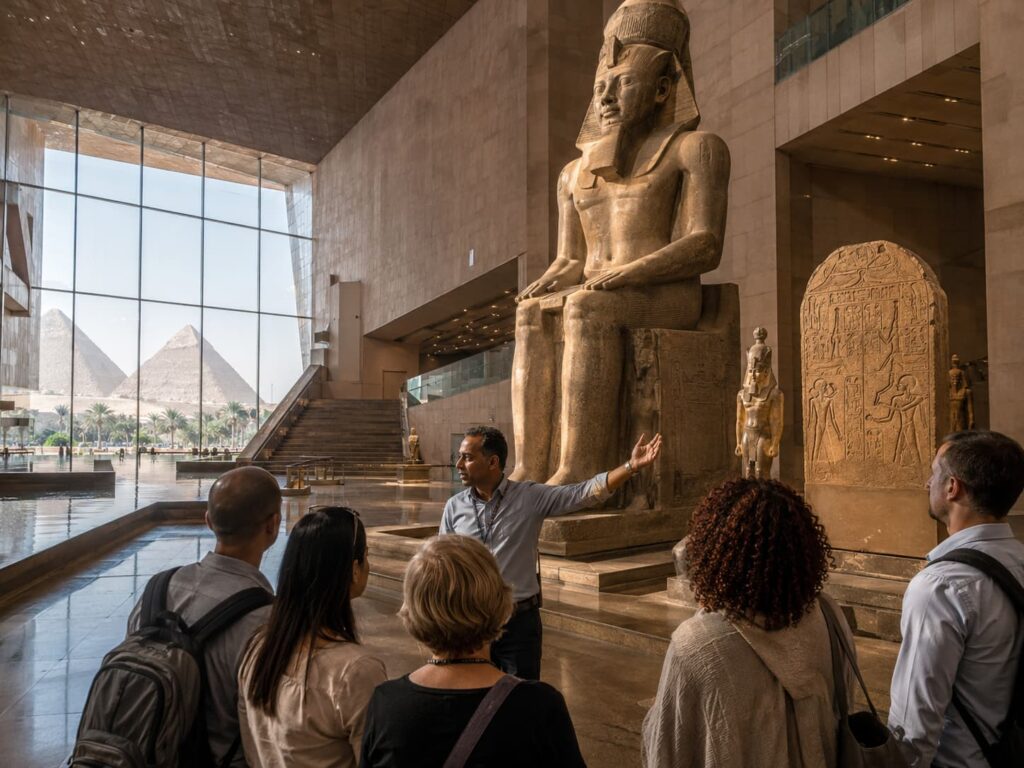
That is the case for the Grand Egyptian Museum. It opened fully on the first of November 2025, and it is now the largest museum on earth devoted to a single civilization. The whole of Tutankhamun’s tomb collection, close to 5,400 objects including the golden mask, is displayed together for the first time since Howard Carter cleared the tomb in 1922. An eleven meter statue of Ramses II greets you in the atrium. It sits about two kilometers from the Giza pyramids, so you can walk out of the galleries and see the real thing on the horizon.
Here is the thing though. How much you get out of it depends heavily on how you choose to visit. Some people learn best on their own, at their own pace. Others need a great teacher in the room. A few want the structure of a group. The museum runs on timed-entry tickets booked online ahead of time now, so a little planning also saves you from losing your morning in a queue.
Below are the best ways to experience the GEM, ranked for the kind of learner you are, the way a good modern learner picks the format that actually fits them.
1. Book Through a Specialist Platform
If you want the flexibility of learning your own way without the admin headache, start here. The Grand Egyptian Museum Tickets is a platform built specifically around the GEM, so instead of decoding the official portal and guessing at timed slots, you get the ticket types and tour options laid out clearly with the queue-skipping already handled.
The advantage is that it covers both ends of how people like to visit. You can grab a straightforward pre-purchased timed ticket and roam the twelve main galleries at your own pace, or add a guide if you would rather have the context. Tickets are bought in advance, so you walk past the entry line instead of standing in it, which on a busy day is the difference between a calm morning and a frustrating one.
For a first visit especially, that clarity matters, because the GEM is enormous and easy to underestimate. You can compare GEM tickets and tour options here and pick the format before you fly, rather than working it out tired and jetlagged at the gate.
Best for independent learners and first timers who want choice without the logistical guesswork. If you are the type who researches everything before committing, this is your starting point.
2. Go Official and Self-Guided
This is the self-paced course of museum visits. Buy a timed entry ticket through the official portal, walk in, and let the building teach you. The galleries are arranged thematically and chronologically, so even without a guide you move through Egyptian society, kingship, religion, and the afterlife in a way that actually makes sense.
A foreign adult ticket runs roughly twenty-eight to thirty dollars and now covers everything, including the Tutankhamun galleries, with no separate add-on. Signage is good, and you can linger as long as you want at the pieces that grab you, which is the real joy of going solo.
The trade-off is that no sign replaces a knowledgeable human. You will see the golden mask, but you might miss the small story behind the object next to it. And the official site can be fiddly to book on busy days.
Best for confident, curious visitors who prefer reading the room themselves and setting their own pace. Not ideal if you want the deeper narrative handed to you.
3. Hire a Private Egyptologist
This is the one-on-one tutor version, and for a lot of adult learners it is the one that turns a good visit into a great one. Established Cairo operators like Memphis Tours or Emo Tours can pair you with a licensed Egyptologist guide, someone with an actual degree in this material, not a script.
A good guide does what a great instructor does. They read your interest and go deeper where you lean in, connect the object in front of you to the wider story, and answer the questions the placards never anticipate. Two hours with the right person can teach you more than a week of casual reading.
It costs more than going alone, and a private guide means you move at the pace of your group rather than wandering off on a whim. Some people find that constraining.
Best for travelers who want to genuinely understand what they are looking at, and who value expertise over saving money. If ancient Egypt is a real interest and not just a photo stop, this is the pick.
4. Join a Guided GEM and Giza Pyramids Day Tour
Since the museum sits so close to the pyramids, the most efficient way to learn the whole story in one day is a combined guided tour. Plenty of reputable operators run these with hotel pickup, and the logic is sound: see the monuments the pharaohs built, then walk through the treasures they were buried with, all in a single narrative thread.
This is the structured cohort approach. A guide sets the pace, handles the tickets and transport, and ties the pyramids and the GEM together so the day feels like one lesson rather than two errands.
The downside is the pace. Combining both in a day means less lingering time at each, and you are on the group’s schedule. If you want to spend three unhurried hours with Tutankhamun alone, this is not it.
Best for time-pressed travelers and first-time visitors to Egypt who want the big picture efficiently, with the context included.
5. Take a Small-Group Cultural Tour
If you like learning alongside other people but not in a crowd of forty, a small-group tour is the middle path. These cap the numbers, so you still get real access to the guide and the chance to ask questions, without the private-tour price tag.
The social side is a genuine bonus. You end up trading observations with fellow travelers who came because they care about the same things, which is often half the pleasure. Good operators keep groups small enough that nobody is straining to hear.
The catch is you have less control. Departure times are fixed, and the guide pitches to the group rather than to you specifically.
Best for solo travelers, curious couples, and anyone on a mid-range budget who wants guidance and company without going fully private.
A Few Practical Things Before You Go
Arrive for the nine o’clock opening. The galleries fill with tour buses later in the morning, and that first hour is the quietest you will get. Allow at least three hours for the highlights, and closer to a full day if you want to do the twelve main galleries justice.
Book your timed ticket in advance. Walk-up entry is unreliable on busy days, and holidays bring serious queues. Winter is peak season, and the galleries stay open until nine on Wednesdays and Saturdays if you prefer a quieter evening visit.
Wear comfortable shoes, because the building is vast and you will cover more ground than you expect. Bring water, and check the current photography rules for the Tutankhamun galleries on the day.
If you want to do the reading before or after, the Griffith Institute at Oxford holds Howard Carter’s original excavation records from 1922, which are freely available and genuinely fascinating to browse. For planning the wider trip, the official Egypt tourism site is a clean starting point, and it pairs well with any related Egypt travel guides already on the site.
Matching the Visit to How You Learn
The GEM rewards travelers who pick the format that suits them rather than defaulting to whatever is cheapest or fastest.
Start by comparing your options through The Grand Egyptian Museum Tickets so you choose with a clear head. Want to explore at your own pace, go official and self-guided. Want to really understand it, hire a private Egyptologist. Short on time, take the combined GEM and pyramids day tour. Want guidance and company without the private cost, join a small group.
Travel like this is one of the most underrated forms of adult education there is. The same instinct behind investing in your own growth through learning applies here. Choose the way you learn best, and a few hours in this museum will stay with you far longer than any screen ever could.
Author note: details here reflect the museum’s status as of 2026, after its November 2025 grand opening. Ticket prices, hours, and gallery policies are set by Egypt’s Ministry of Tourism and can change, so confirm the current details before you book.